Many people have made the point bipolar disorder is an invisible illness. That’s one of the things about it that makes it so frustrating. People can’t see bipolar disorder; it isn’t part of their reality; so, obviously, it isn’t important or life-altering. Some people take this to the conclusion of suggesting bipolar disorder doesn’t really exist at all. But we know bipolar disorder is real. We know something doesn’t have to be outwardly visible, or even visible under a microscope, to be real. Bipolar disorder may be an inherently invisible illness but let’s do what we can to make it visible. Let’s stand up for what we can’t see.
Healthline’s #MakeItVisible Campaign
I’m pleased to be a part of this month’s #MakeItVisible campaign with HealthLine. HealthLine has been in the business of supporting those with illnesses for a long time and right now their focus is on invisible illnesses or, more specifically, pain illnesses. (And if you ask me, the invisible bipolar disorder is a chronic pain condition no matter how you slice it.)
HealthLine wants you to share your story and help the world understand that you might be battling an illness even though you don’t “look sick.” HealthLine wants you to tag invisible illness pictures and share invisible illness stories both through their website and through social media. See here for how to contact HealthLine and share your story.
But, perhaps the best thing about the #MakeItVisible campaign is that for every photo you share tagged with #MakeItVisible, HealthLine will donate $5.00 to the United States Pain Foundation.
That’s right, just by bringing light onto a subject on which most of us feel so passionately, you can help someone in need, not only through your voice but also through the donation HealthLine will be making. (And yes, I am considered a Thought Leader in this area.)
The Invisible Illness of Bipolar Disorder
When it comes to research funding, serious mental illnesses like bipolar disorder are at the bottom of the pack. It seems that those who hold the purse strings think we don’t deserve the same kind of funding other illnesses. In 2018:
Bipolar disorder will receive $75 million* in funding and it has a prevalence of about 2% of the population. That’s about $2.50 per sick person and $100.37 per death.** (11% of people die of this illness.)
Prostate cancer will receive $215 million in funding and has a prevalence of about 2.2%. That works out to about $28.77 per sick person and $1438.69 per death. (About 2% of people with this illness die of it in 10 years.)
Liver disease will receive $509 million in funding and affects about 1.6% of the population. That works about to about $93.67 per sick person and $9366.56 per death. (About 0.0001% of people with this illness die from it.)
Brain cancer will receive $260 million in funding and has a prevalence of about 0.1%. That’s about $765.52 per sick person. (Survival rates for this illness vary dramatically depending on the type of brain cancer.)
(“Dietary supplements” gets $241 million, by the way, and they address no disease whatsoever.)
Are people with liver disease 93% more valuable than we are? I’m sure they’re lovely people but I would have to say not.
I’m not saying that cancers or other illnesses do not deserve funding. I’m not even saying they don’t deserve the funding they get – maybe they do – but what I am saying is that those of us invisible, serious mental illnesses are suffering because of it. According to the numbers, our lives are actually worth less. And it’s because we’re crazy, government-money-sucking, non-contributing members of society. Except, of course, that we’re not. We’re just like everyone else. People with invisible illnesses have the same worth as everyone else, and our illnesses are just as severe and deserve the same respect.
Why Making Invisible Illnesses Like Bipolar Disorder Matters
Invisible illnesses kill people and destroy lives every day. It’s really that simple. We’re the people that fall without a sound because no one knew we were sick. We’re the ones that are overlooked because we don’t “look” sick. We’re the ones that aren’t important because no one can see our suffering.
But suffering you do not know about and aren’t acquainted with is just as painful as suffering that hits close to home.
And we need this to be understood. We need people to know that a bipolar crisis is like a compound fracture – it needs immediate and emergent treatment. The bone really is sticking out of our legs, you just can’t see it.
So join me please and help #MakeItVisisble a huge success. Share your story. Share an image of what invisible illness really looks like and tag it. And make HealthLine has to give lots of money to the United States Pain Foundation.
Natasha Tracy is an award-winning writer, speaker, advocate, and consultant from the Pacific Northwest. She has been living with bipolar disorder for 26 years and has written more than 2000 articles on the subject.
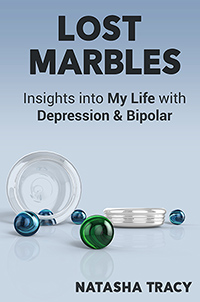
Find more of Natasha’s work in her acclaimed book: "Lost Marbles: Insights into My Life with Depression & Bipolar" on Amazon.
Connect with Natasha at the social media links below.
Shopping for someone with a mental illness can feel tricky—you want a gift that actually helps, not just more clutter. This guide walks you through 15 thoughtful, low-pressure mental health gifts that offer real comfort, reduce stress, and say, “I see you and I’m here,” during the holidays and all year.
I’m never going to call bipolar pain a “gift.” Most days, I just want it to stop. But emotional and even physical pain aren’t always random torture—they’re often trying to tell us something. This piece digs into what your pain might be saying, how to listen, and how that can make living with it just a little easier.
After 24 of 30 TMS sessions with no meaningful improvement, I wrote the guide I needed: why failed treatment hurts, how to get through the next 72 hours, and what to ask your clinician now.
I didn’t receive a proper diagnosis for my bipolar 2. I was always told I had depression and was treated with antidepressants that didn’t help. One day it came down to an emergency, if I didn’t get help I was going to die. I got into see a psychologist and after interviewing me and my spouse, diagnosed me with borderline personally disorder and bipolar 2. After medications + adjustments to doses. I began to feel better. I had lived with this condition for 40yrs. But even though I felt better the damage to my marriage had already been done so after 17yrs with my third wife I now have been devorced 3 times I have never had a job for more than 4yrs. Now that I am receiving treatment and feeling better I feel guilty for past behaviors that I couldn’t control.
I wrote to Healthline. I wrote that I have had ultra rapid cycling since I was 3-4 years old, and that I was unable to work, and got Social Security Disability Insurance when I was 56 years old. I concluded my letter with this:
Prior to getting medications when I was 54 years old, I thought about suicide every day. My younger sister tells me she grew up hearing me say, many many times, “I wish I’d never been born.” Although the suicidal thinking has mostly gone due to the psychoactive medications, I still do honestly wish I had never been born, and it would make me glad, if I would just die. The pain of my bipolar disorder is unbearable. I wrote a poem when I was 66 years old that says, “Will I make it for the next four years?” I was hoping to die before reaching age 70, but now I am 75. I’m in excellent physical health, and my family members have long life spans. So my desire to die probably will not happen soon.
One therapist I saw recently said, “You are more than your bipolar disorder.” I do not agree with this. Bipolar disorder affects me at ALL times, and I never know when something will trigger a rage attack, a major depressive episode, or if there is no trigger but they happen spontaneously.
Subscribe to my monthly newsletter to get the latest from Bipolar Burble, Breaking Bipolar, my vlogs at bpHope, my masterclasses, and other useful tidbits -- plus get a FREE eBook on coping skills.
Thank you for subscribing. Look for an email to complete your subscription.





I didn’t receive a proper diagnosis for my bipolar 2. I was always told I had depression and was treated with antidepressants that didn’t help. One day it came down to an emergency, if I didn’t get help I was going to die. I got into see a psychologist and after interviewing me and my spouse, diagnosed me with borderline personally disorder and bipolar 2. After medications + adjustments to doses. I began to feel better. I had lived with this condition for 40yrs. But even though I felt better the damage to my marriage had already been done so after 17yrs with my third wife I now have been devorced 3 times I have never had a job for more than 4yrs. Now that I am receiving treatment and feeling better I feel guilty for past behaviors that I couldn’t control.
I wrote to Healthline. I wrote that I have had ultra rapid cycling since I was 3-4 years old, and that I was unable to work, and got Social Security Disability Insurance when I was 56 years old. I concluded my letter with this:
Prior to getting medications when I was 54 years old, I thought about suicide every day. My younger sister tells me she grew up hearing me say, many many times, “I wish I’d never been born.” Although the suicidal thinking has mostly gone due to the psychoactive medications, I still do honestly wish I had never been born, and it would make me glad, if I would just die. The pain of my bipolar disorder is unbearable. I wrote a poem when I was 66 years old that says, “Will I make it for the next four years?” I was hoping to die before reaching age 70, but now I am 75. I’m in excellent physical health, and my family members have long life spans. So my desire to die probably will not happen soon.
One therapist I saw recently said, “You are more than your bipolar disorder.” I do not agree with this. Bipolar disorder affects me at ALL times, and I never know when something will trigger a rage attack, a major depressive episode, or if there is no trigger but they happen spontaneously.