Today’s piece is sponsored by Larimar: Beyond Intelligence. Larimar is working on creating artificial intelligence-based emotion regulation tools. Read about their exciting developments below.
Mental health is something that’s thought of as happening within oneself, but what if an artificial intelligence in the form of an app plus a wearable could help improve your mental health? What if an artificial intelligence could read your emotional state, learn about your challenges, and then give you specific tasks and tools to help you feel better? What if your own journey of self-discovery could be sped up using the latest in neuroscience, biofeedback, and cognitive behavioral therapy? At least one company and researcher say it’s possible today; so, let’s explore the ideas around emotional self-regulation and how artificial intelligence and mental health can mix. (At the end, I’m going to talk about Larimar’s exciting artificial intelligence, mental health-improving project. You can skip to that bit if you like by clicking here or click here to take their online wellness quiz.)
What Is Artificial Intelligence?
The term “artificial intelligence” makes some people think of the Terminator, the super-smart computer in Star Trek, or the robot park in Westworld. Artificial intelligence (AI) in the real world, though, is not necessarily malevolent nor all-knowing. According to Oxford Languages, artificial intelligence is defined as:
“the theory and development of computer systems able to perform tasks that normally require human intelligence, such as visual perception, speech recognition, decision-making, and translation between languages.”
Simple examples of artificial intelligence include your robot vacuum as it performs a task and perceives objects like stairs so as to avoid them. Another everyday AI is your Google Home or Alexa device. They recognize speech and can give you loads of useful information and complete tasks for you like make a restaurant reservation or buy toilet paper.
How Can Artificial Intelligence Impact Your Mental Health? What Is Emotion AI?
Anything that can vacuum my apartment for me can improve my mental health, but there may be more direct ways of going about it for many people.
Artificial intelligence is being integrated throughout medicine, and AI is diagnosing conditions, interpreting images, and recommending treatment plans already. And while this may be more understandable when a computer can look for malignant cells on a slide, AI can work in mental health too.
For example, computers can pick up on signs of distress in both writing and speaking, tests provide insight into unspoken feelings, and adding to that wearable data starts to provide a more complete picture of a person’s emotional state. And, of course, if a computer knows your emotional state, it can be programmed to make recommendations to help improve that state. The field wherein an AI understands your emotions is called emotion AI.
Emotion AI is defined as:
“a subset of artificial intelligence (the broad term for machines replicating the way humans think) that measures, understands, simulates, and reacts to human emotions.”
Other names for emotion AI are affective computing or artificial emotional intelligence.
Emotion AI is critical when it comes to computers communicating with people because so much of what humans communicate and act upon is emotional and unspoken. A computer – or another human for that matter – cannot hope to effectively communicate with a person, let alone help a person manage their emotions or improve their emotional state, without first understanding how that individual is feeling.
Improving an emotional state is done through good emotional hygiene and emotional self-regulation.
What Is Emotion Self-Regulation? What Is Emotional Hygiene?
Andrea Bell from GoodTherapy.org has a straightforward definition of self-regulation: It’s:
“control [of oneself] by oneself.”
Bell also notes:
“Someone who has good emotional self-regulation has the ability to keep their emotions in check. They can resist impulsive behaviors that might worsen their situation, and they can cheer themselves up when they’re feeling down. They have a flexible range of emotional and behavioral responses that are well matched to the demands of their environment”
So, you emotionally self-regulate when you talk yourself down from anger or cheer yourself up after bad news.
Emotional hygiene is a critical component of emotional regulation. According to Guy Winch, Ph.D. Of Psychology Today, emotional hygiene is:
“Being mindful of our psychological health and adopting brief daily habits to monitor and address psychological wounds when we sustain them” If we are not mindful of our psychological health or we do not monitor for psychological wounds, we cannot hope to emotionally self-regulate.
What Is an Emotional Self-Regulation Tool? What Is an Emotional Hygiene Tool?
Emotional self-regulation and emotional hygiene, then, are critical to life satisfaction and overall mental wellness. These concepts are what allow us to enjoy the good things and bounce back from the bad things in life.
A tool to help your emotions would ideally focus both on emotional hygiene and emotional self-regulation. And the great thing about an AI is that it can recommend specific self-regulation techniques and emotional hygiene skills that are the most relevant for you. A journey of emotional self-discovery can then begin, and it can all start with you and be enabled by an emotion artificial intelligence.
What Science Might an Artificial Intelligence Be Based on in Order to Improve Mental Health?
There are many components an AI has to understand before helping a person with their emotional health and wellness. The overarching discipline these components are in is called neuroscience. Neuroscience is defined as:
“a branch (such as neurophysiology) of the life sciences that deals with the anatomy, physiology, biochemistry, or molecular biology of nerves and nervous tissue and especially with their relation to behavior and learning.”
It is an understanding of neuroscience that can lead to things like cognitive behavioral therapy and biofeedback procedures, along with understanding the importance of support groups that can help people with their emotional wellness.
For example, cognitive behavioral therapy (CBT) is a structured type of psychotherapy that is for a limited number of sessions and focuses on helping you become aware of inaccurate or negative thoughts so you can view your experiences more clearly and respond to them in a healthier way. It’s not the kind of therapy that analyzes your past traumas or other stressors; it’s one that focuses on giving you coping techniques and tools.
According to the Mayo Clinic,
“CBT can be an effective tool to help anyone learn how to better manage stressful life situations . . . [and] identify ways of managing emotions.”
Cognitive behavioral therapy is typically done by a psychotherapist, but because CBT is such a structured therapy, it’s a perfect type of therapy for artificial intelligence facilitation, and, in fact, this is happening in multiple spaces. Artificial intelligence has already shown to be useful in delivering CBT to alleviate symptoms of anxiety and depression in some circumstances.
An AI can aid in the major CBT steps. According to the Mayo Clinic, these steps include:
Identifying troubling situations or conditions in your life – This is what you want to focus on helping through the CBT process.
Becoming aware of your thoughts, emotions, and beliefs about these concerns – This is about observing what you tell yourself (self-talk), your interpretation of the meaning of the situation, and your beliefs about yourself, other people, and events.
Identifying negative or inaccurate thinking – This step involves recognizing patterns of thinking and behavior that might be contributing to the issue. Paying attention to your physical, emotional, and behavioral responses in different situations can help with this.
Reshaping negative or inaccurate thinking – In this step, you’ll be asked to ask yourself whether your view of the situation is based on fact or an inaccurate perception of what’s going on. With practice, new, healthier thinking and behavioral patterns can become a habit.
Cognitive behavioral therapy is about altering your thoughts and actions and then, in turn, your feelings will follow.
Biofeedback and Mental Health
Another approach to encouraging emotional self-regulation and wellness is with biofeedback procedures. Biofeedback is a technique you can learn to control a bodily function like heart rate. During biofeedback, you’re connected to a device that can monitor and give you information about your body.
Formal biofeedback can include physical feedback from:
Brainwaves
Breathing
Heartrate
Muscle contraction
Sweat gland activity
Temperature
Biofeedback is used to treat many conditions including basic concerns such as stress.
During a biofeedback session, sensors will be used to track some of your physical rhythms, and the information about these rhythms will be fed back to you via a device such as a screen or a beeping sound. You’ll use that information to change your body’s reactions by changing your thoughts, emotions, and behavior.
An example of a biofeedback procedure is the following by the Mayo Clinic:
“For instance, biofeedback can pinpoint tense muscles that are causing headaches. You then learn how to make deliberate physical changes in your body, such as relaxing specific muscles, to reduce your pain. The ultimate goal with biofeedback is to learn to use these techniques at home on your own.”
While you may not have a sensor for your brainwaves at home, many people do have fitness/health wearables, and those can capture different biological rhythms like heart rate, breathing, and even temperature.
Support Groups and Mental Health
Most of us have experienced the benefits of support – this support could come from a family member, friend, faith leader, or another person. But another option for support is an actual support group. Making connections with like-minded people, with people who know what you’re going through because you are connected by a similar type of situation, can offer similar and sometimes even superior support. And if an AI is going to understand and help with a person’s emotions, it needs to be able to connect you with these valuable support groups.
Benefits of support groups on individuals, according to the Mayo Clinic include:
Feeling less lonely, isolated or judged
Reducing distress, depression, anxiety or fatigue
Talking openly and honestly about your feelings
Improving skills to cope with challenges
Staying motivated to manage chronic conditions or stick to treatment plans
Gaining a sense of empowerment, control, or hope
Improving understanding of a disease and your own experience with it
Getting practical feedback about treatment options
Learning about health, economic or social resources
Other overall benefits of these support groups include:
The creation of advocacy groups that contribute to the overall community and influence the global discussion on mental health
Working to decrease the stigma around all mental health issues
A Journey of Self-Discovery Facilitated by AI and Emotional Self-Regulation Tools by Larimar
While emotional self-regulation, emotional hygiene, and psychotherapies can be thought of in isolation, when put together, a bigger picture emerges. That’s when a journey of emotional self-discovery can occur, and that’s what Larimar wants to enable. Larimar uses an app for your phone and the wearable you already own (a Larimar wearable will also be available soon) to enable you to improve your emotional wellness. Not only that, but you’ll also be able to connect with like-minded people such as practitioners, therapists, and mental health advocates for a discussion or support. (Click here to see their Kickstarter page.)
For example, have you ever seen your wellness mapped like this:
A very simple online wellbeing quiz allows you to do that right now. It also offers advice and a customized list of resources that can help those wellbeing and resilience numbers go up and up. Doing this gives you just a taste of what Larimar has in mind.
Once Larimar’s self-regulation tools get up and running, they will use sophisticated emotion artificial intelligence with data from you and/or your wearable to help you improve your emotional wellness every day through support groups, tasks, workouts, and techniques.
If helping to improve emotional wellness is a goal you can support, you’ll want to check out Larimar’s Kickstarter campaign -- coming soon. Not only can you support that campaign by sharing information about it, but you can also get amazing perks for supporting it monetarily.
Sign Up for Larimar's Newsletter
Larimar's newsletter will keep you abreast of all the exciting innovations in this space and tell you how you can take part.
Abeer has in-depth knowledge of artificial intelligence techniques, emotion recognition, mood enhancement and is a passionate, purpose-driven person, enabler, innovator, applied science professional, and a wellbeing activist.
Natasha Tracy is an award-winning writer, speaker, advocate, and consultant from the Pacific Northwest. She has been living with bipolar disorder for 26 years and has written more than 2000 articles on the subject.
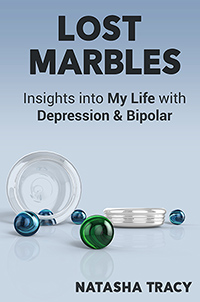
Find more of Natasha’s work in her acclaimed book: "Lost Marbles: Insights into My Life with Depression & Bipolar" on Amazon.
Connect with Natasha at the social media links below.
If you sit down to work and somehow end up 40 minutes deep in scrolling, you’re not broken—you’re human in a world engineered for interruption. This post breaks down the science of distraction (notifications, task-switching, and even your phone’s mere presence) and shows how a simple “friction” approach can help you get your focus back. You’ll learn how the Brick device works, why willpower isn’t the point, and a step-by-step plan you can copy today—even if you don’t buy anything.
Shopping for someone with a mental illness can feel tricky—you want a gift that actually helps, not just more clutter. This guide walks you through 15 thoughtful, low-pressure mental health gifts that offer real comfort, reduce stress, and say, “I see you and I’m here,” during the holidays and all year.
I’m never going to call bipolar pain a “gift.” Most days, I just want it to stop. But emotional and even physical pain aren’t always random torture—they’re often trying to tell us something. This piece digs into what your pain might be saying, how to listen, and how that can make living with it just a little easier.
I’m not a big fan of any of the bipolar apps ,so I certainly will not be getting this AI app when it comes out.If you notice in the permissions section and information collected notices on these app they collect information. Some app do say you don’t have to provide any personal info,however they collect information on your phone,your location via wifi or data IP address.
I am not a candidate for biofeedback nudges. I can’t handle my watch telling me to stand every hour. If I had a headache and had to endure a beeping device instructing me to “Let it go…” I’d quickly let it go against the nearest wall.
This is me recognizing my patterns of thought, emotion, and behavior in advance of the Bipolar Wearables Collection (TM) invasion. Less is less and I like less and less.
Subscribe to my monthly newsletter to get the latest from Bipolar Burble, Breaking Bipolar, my vlogs at bpHope, my masterclasses, and other useful tidbits -- plus get a FREE eBook on coping skills.
Thank you for subscribing. Look for an email to complete your subscription.





I’m not a big fan of any of the bipolar apps ,so I certainly will not be getting this AI app when it comes out.If you notice in the permissions section and information collected notices on these app they collect information. Some app do say you don’t have to provide any personal info,however they collect information on your phone,your location via wifi or data IP address.
I am not a candidate for biofeedback nudges. I can’t handle my watch telling me to stand every hour. If I had a headache and had to endure a beeping device instructing me to “Let it go…” I’d quickly let it go against the nearest wall.
This is me recognizing my patterns of thought, emotion, and behavior in advance of the Bipolar Wearables Collection (TM) invasion. Less is less and I like less and less.